
In this episode, family nutritionist Julia Wolman talks about the influence of diet culture in parenting.
-
Show notes
-
Transcript
-
Highlights
In this episode - The influence of diet culture on parenting
We've had a few episodes now on this podcast that are all about helping children with their relationship with food, including episodes on how we can talk to children about food, how we can fend off harmful food talk around children from other people and how we can work towards food freedom in our own relationship with food so that we don't pass on our issues with food to our children.
And it's that final piece that I want to come back to in today's episode, our own relationship with food. But today we're coming at this from a different perspective and I'm talking to child and family nutritionist, Julia Wolman about how our experiences of living in a world of diet culture before we have children actually primes us as new parents to find feeding our children difficult and stressful.
Music "Happy Days" by Simon Folwar via Uppbeat
About the guest
About the guest
Sara is a highly specialist allergy dietitian with over 11 years’ experience, who has worked at two NHS UK allergy centres of excellence: St Thomas’ Hospital in London and Southampton. She helped establish the first adult allergy dietitian service in Southampton and now specialises in supporting children with allergies, both within the NHS and privately through her company, YNRD Ltd. She has taught and marked on the Southampton Allergy MSc and taught allergy on the Dietetics MSc at King’s College London as well as carrying out allergy research. She has also worked in CAMHS with children and with eating disorders, and is passionate about children’s nutrition, accurate allergy diagnosis, safe avoidance and reintroduction where possible, and providing realistic nutrition advice that supports a healthy relationship with food. She also specialises in allergy and eczema, and in 2024 set up the first paediatric dietitian role within the dermatology dept at Southampton Children's Hospital.
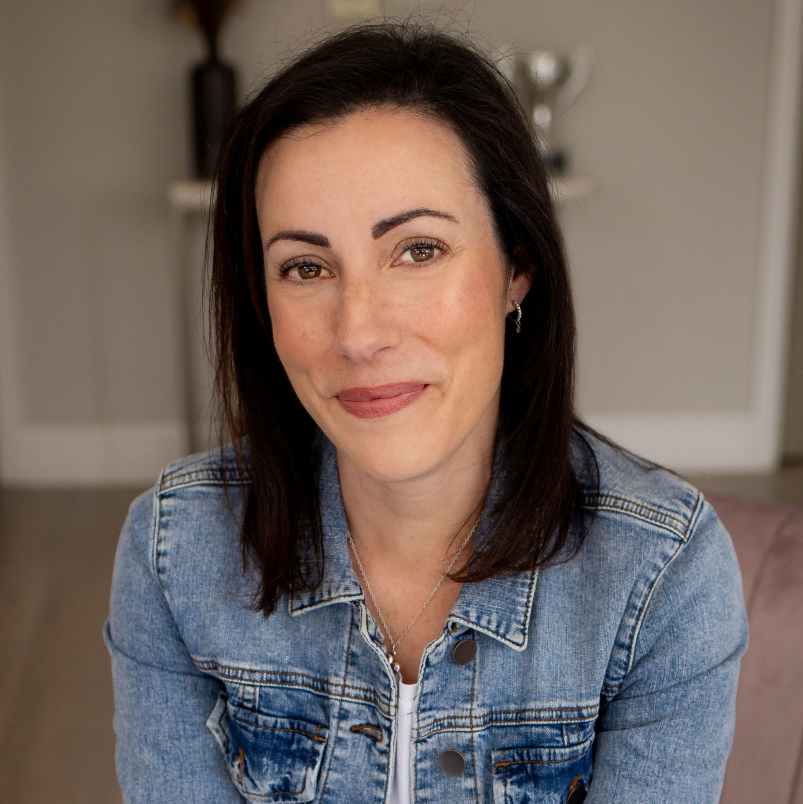
Julia is a Registered Nutritionist with a special interest in family and child nutrition stemming from 20 years’ experience. Julia’s career began working for the NHS and local authorities in diverse communities, running healthy eating projects and training for parents, schools and nurseries. During maternity leave with her second son (now 15) Julia set up her family nutrition consultancy, and has been enjoying this work ever since. Julia has also worked as an NHS health coach as well as undertaken various charity roles alongside her parent work. Julia is particularly passionate about supporting parents to improve their own eating behaviours so that they can not only feel healthier and more energised, but also be the best role models for their kids.
Useful links in this episode
Julia's website: https://www.juliawolman.co.uk
Julia's Instagram: https://www.instagram.com/thefamilyfoodcoach
Julia's post on this topic: https://www.instagram.com/p/DR26q-NjDLj/
Episode Transcript - The influence of diet culture on parenting
Joanne Roach (00:13)
Hello and welcome to the Food for Kids podcast. I'm Joanne from the Foodies.
We've had a few episodes now on this podcast that are all about helping children with their relationship with food, including episodes on how we can talk to children about food, how we can fend off harmful food talk around children from other people and how we can work towards food freedom in our own relationship with food so that we don't pass on our issues with food to our children.
And it's that final piece that I want to come back to in today's episode, our own relationship with food. But today we're coming at this from a different perspective and I'm talking to child and family nutritionist, Julia Wolman about how our experiences of living in a world of diet culture before we have children actually primes us as new parents to find feeding our children difficult and stressful.
Julia is a registered nutritionist with 20 years experience in family and child nutrition. She started out in the NHS and local authority community practice running healthy eating projects and training for parents, schools and nurseries. And she's continued NHS coaching alongside her private family nutrition practice.
Julia published a really good Instagram post about this a few weeks back and the way she framed it really made me think about those first few years of parenting and how I was quite fixated on getting things right. And it made me draw the lines between that and the way society had trained me to look at food before I was a mom. I think it's easy to overlook the degree to which we internalise messages about being virtuous around food, demonstrating that virtue to other people, and measuring and analysing lots of elements of our diets.
So it follows that we might not notice when that need to prove ourselves as good, healthy, virtuous eaters bleeds seamlessly into a need to prove ourselves as good, healthy, virtuous feeders of our children. So this was a very interesting chat and I hope you'll also find it comforting and validating. So I'll hand over now to the interview.
Joanne Roach (02:02)
So lots of parents listening would admit that they find feeding their children stressful or confusing. And when I speak to parents, they're often really focused on something specific that they're not getting right in their kid's diet. Something that their child won't eat or a feeling of inadequacy about their own ability as a parent to get them to eat certain things. How common when you work with families is this hyper-focus on individual nutrients or food groups in children's eating, rather than looking at the overall pattern of their relationship with food.
Julia Wolman (02:32)
Yeah, you're, you're absolutely right. It is something that is really, really common. And so many parents come to me feeling like a really bad parent, like they’ve failed. And some are brave enough to admit that they were worried that they might get a telling off from me. And,
what I do is I try and help them to actually look at some of the positives that are going on in their children's day-to-day eating and over the week because we're so hyper-focused on what's not going well, what they're not eating, which they should be, or what they're eating too much of, that they shouldn't be. So, for example, a lot of parents will reach out because their children aren't eating enough vegetables. So there's this focus on this veg. And when we actually look at the weekly pattern and intake, actually their children are eating quite a lot of fruit. So I'm kind of helping them normalize, actually fruit and veg are in the same food group. So if they're not eating that much veg, it's really not the end of the world. So there's this hyper-focus on vegetables. There's a hyper-focus nowadays more and more on protein. Meat and fish is something that is a bit more tricky and quite common that children don't want to eat. So there's this feeling of absolute inadequacy if their children aren't eating much meat or fish. But of course there's protein in lots of day-to-day foods And then there's sugar as well. Huge hyper focus on sugar. So the focus on food and what food represents is being lost. And like you say, this hyper focus on nutrients is coming through really loud and clear
Joanne Roach (04:02)
I saw that you recently posted about the fact that even though you'd already been a family nutritionist in the NHS for years at the time you had your own kids, you realised that diet culture had crept into the way that you fed your children in those first few years. Can you explain what this looked like in practice for you and why you think it was diet culture that primed you to feel this way?
Julia Wolman (04:23)
Yeah, absolutely. I mean, there I was as, like, the expert in feeding kids and I'd been doing group sessions one-to-one working and training nursery staff. And then I had first son. And I got overwhelmed with anxiety when I started weaning him. And I couldn't believe it. I was a bit like, you know, what, what's going on? I'm here supporting parents to not feel anxious, and there I was feeling anxious if my baby only had two spoons of their vegetable puree, for example. I kept a weaning record just to kind of be able to spot patterns, more an observational thing, but I found that I was getting quite obsessed with it. Like when he was only having two spoons or three spoons. Sometimes my son would go for you know a couple of days without really wanting to eat at all. Now I knew that that was normal and nothing to get worried about but when my son was in the high chair I just really was overcome with anxiety so that's when it hit me and it was really quite unsettling, it really made me question myself and like, what was I doing talking to parents about staying calm and chilled and not hyper focusing when I was doing the same thing? So yeah, that was quite eye-opening.
My ethos is all about everything in moderation and not restricting children. Without realizing I had been limiting exposure to sugar sugary foods and I thought, well, you know, this is what I'm supposed to do. I'm the nutritionist. You know, I can't have other parents see me give my child a biscuit. And something really interesting happened when my first son, we're talking about 15 years ago now, I was at a toddler group and he was probably about two and a half and there was like a table of you know snacks and things for the parents to eat and there were these muffins on the table and I remember it so clearly. He literally stood by this tray of muffins and literally was having a field day he wouldn't stop eating them. And I was bit embarrassed because I was talking to other parents at the time, you know, having my tea. And I was like in the corner of my eye, I saw him just going mad for these muffins. And it made me realize that what I had been doing unwittingly was causing him to become a little bit obsessed by these foods when he saw them out. So yeah, that was a big turning point for me. And ever since then, I do bring sweet foods into my kids' diets as a matter of normality. Not as a free for all, but it’s nothing's off limits. And as a result, I'd like to say that my kids have developed a really nice healthy attitude and relationship to all foods.
Joanne Roach (07:09)
So on that note, what are some of the thinking patterns or food rules that you see in ordinary family food dynamics, that actually you can see are probably influenced by diet culture?
Julia Wolman (07:20)
Yeah, so many things that just kind of creep in, for example, really sort of micromanaging quantities that children are eating. So it might be saying, well, you need to have two more bites of your vegetables before you have your ice cream, for example. So this is one of the ways that diet culture really gets us. Rather than thinking of all foods as having a place and just food and some we eat more of, some we eat less of, it trains us to think of foods in terms of good and bad,sometimes even like clean and dirty and all these sorts of things. And often we get into this kind of food hierarchy.
Parents might say, can't have dessert or you can't have ice cream until you've eaten your vegetables. And what that does for a child is it makes them think, well the vegetables must be so revolting that it's almost like a chore before they then get the reward, the good food. Other things that parents might do is say, well, no, you're not allowed this because it's bad for you. And again, it's just that kind of language about good and bad.
And another thing that I've started to see a lot of parents do is talking to their children about their weight. So diet culture is not just about food, but it's also about what it teaches us to believe around weight and bodies. In other words, that it's like the thin ideal and that if your child is anything other than that ideal, there's something wrong with them or you're doing a bad job as a parent. So I'm seeing lots and lots more parents starting to become really worried, you know, if their child develops a little tummy or, grows out of their trousers in three months or something like that. And they start to talk to them and educate them about exercising more and eating better and we really just need to try and take that focus off completely.
Joanne Roach (09:09)
We all want our children to be confident and none of us get up in the morning and think “I'm going to consciously pass on diet culture to my kids today”. But obviously, sometimes we can do that unconsciously. So what are some of the ways that we accidentally model our own patterns in that more unconscious way.
Julia Wolman (09:25)
Yeah, absolutely. It all comes from like the best of intentions, you know, we're led to believe that we're doing the right thing. So for example, you only have to like walk down the supermarket aisles and see foods that have now got specific labels like, high protein yogurts, high protein bread, gluten free everything. These sort of labels that make us think, well, we should buy that food because then that will mean that we're a good parent and we're buying the right, the right things, quote unquote. As they get older and they start to become more aware and they're opening the fridge or the cupboards and they're seeing everything is labelled, low sugar this, high protein that, they're going to start thinking, well, you know, this is the right way to eat.
I'm not saying we should never buy them, because of course, know, gluten free products are really important for people with celiac allergies, with a gluten intolerance. The point that I really want to make is the fact that we are led to believe through diet culture that we should be buying these altered products, this bread that has extra protein added or that we should be putting protein powder into our children's smoothies for example.
Joanne Roach (10:34)
Some of these can be really good shortcuts. But there's a difference between occasional shortcuts and focusing the whole of your diet around maxxing all sorts of things.
Julia Wolman (10:44)
I think just being aware of what's driving our food choices. I was really intrigued to buy a high protein loaf of bread. I just really wanted to sort of see what it's like. And my kids know that I don't really go for all of that and my son actually said to me, know, mummy what's all this about this high protein bread? I thought you didn't go for that kind of thing. And I explained, I just wanted to try it. But the point I want to make is that children soak it up. My son noticed the wording on the packet. He noticed it said high protein. So, you know, think they just pick everything up, don't they? And we just have to be really aware of what we're modelling.
Very subconsciously, we might say little things which our children pick up on. For example, we, you know, we might be at a birthday party or we might be you know having friends over for tea and there'll be some cake, and we might say “oh I'd love a piece but I really shouldn't” or “I'm trying to be good” you know these sorts of things and we do it because it makes us look how we should look, like we're resisting the bad food. And our children are picking up on things like that. And it's just not helpful. And we need to model actually that we trust ourselves around cake and that we're okay to have a piece of cake. We can even have two if we want, because we're not eating cake all day long. It's those little things we need to catch ourselves and just stop and think, how are we modelling this balanced attitudes to our children before we say things?
Joanne Roach (12:14)
And there's a difference between “no thanks I'm full” or “no thanks I've had enough today” and “no thanks I shouldn't” because it's that should word.
Julia Wolman (12:20)
Yes, exactly. Exactly. Or I'm trying to be good, I shouldn't really. There's so much nuance and there is a lot of grey areas and that's why it's very, very tricky for parents and can be quite stressful.
Joanne Roach (12:36)
OK, so for parents listening who are in a chapter of life where they're finding their children's food hard, what would you like them to know?
Julia Wolman (12:44)
I would just like to emphasize that you are doing your best. We as parents are doing our best and society will tell us otherwise. It will try and make us feel really bad when there is no need. So try to just remove the noise, follow accounts on social media that make you feel good, that don't make you feel like you're a failure or you're inadequate or that you're doing anything other than your best. And the other thing is to just step back and look at the bigger picture and not focus on any one plate of food or any one day at any one time.
You know, what we're trying to do, all of us, is just lay down healthy foundations that our children will carry through for the future. What they eat at any one time is really not actually that important, and there's no such thing as a perfect plate of food or a perfect day's eating. It just doesn't exist. So take the pressure off, step back, think about the bigger picture, the relationship with food that your child is developing over time, they're going to carry through into life, into adulthood and beyond. And yeah, take the pressure off because you're doing a great job.
Joanne Roach (14:03)
I like the way that Julia focuses on the fact that it's society that makes us think that to be good parents we have to make our kids eat in a way which society will applaud us for. But with that pressure comes a lot of trying to keep to rules that aren't really about learning to eat well and with joy, but are instead about learning to eat in a controlled way that can be measured and graded and compared to some shifting ideal of what health is supposed to look like.
Diet culture is everywhere and its purpose is to make us so focused on our body shape and our virtuousness that we will buy any product, measure any metric or go without anything to meet those standards.
As adults, it often makes us anxious around food and unable to make food choices without guilt. So if we don't want that for our children, then we need to zoom out and focus on helping our children to relax around food, to listen to their own bodies, to have calm, connected meal times.
I will link in the show notes to the Instagram post that Julia shared about this as well as her other links, and I hope you'll come away feeling a little comforted that it's absolutely not your fault if you find a lot of feeding your child stressful and confusing. The food environment is literally set up to train you to feel that way, so most importantly of all, as Julia says, we shouldn't beat ourselves up for the way we've absorbed these messages. We're doing our best and perfection doesn't exist. So we should take the pressure off ourselves and start learning alongside our children to enjoy sharing food together.
I'll be back next time with another episode later in the week. So I hope to see you then. And in the meantime, really, really happy eating.
Episode Highlights - The influence of diet culture on parenting
00:00 Introduction
02:02 Focusing on individual nutrients
04:02 How diet culture seeps into parenting
09:08 Unconscious ways we model diet culture
14:02 Summary and outro
That was the episode where family nutritionist Julia Wolman talked about the influence of diet culture in parenting.
0 comments