
In this episode we learn about how to talk to children about food, as well as how to prevent our own issues with food being passed on to them.
-
Show notes
-
Transcript
-
Highlights
In this episode - How to talk to children about food
In this episode - How to handle Halloween sweets and have fun with food at Halloween
Today's episode is the second of our series on the theme of helpful information if your child asks to bring someone home for tea who has different dietary requirements than your own family. Back in episode 11 we talked about some tips for hosting a child who is coeliac and today we're talking about having a child for tea who is vegan or plant-based if your family is not. For this I spoke to Paula Hallam from Plant-Based Kids UK.
Paula is a leading children’s dietitian, mum to two teen girls, author and plant based nutrition expert. She is passionate about helping families navigate the (often confusing) world of feeding children without feeling overwhelmed. Her mission is to help parents raise happy, healthy plant-powered kids, without spending hours in the kitchen! Paula has 25 years experience as a children’s dietitian, working in the NHS for 18 years in a variety of paediatric roles, including the world famous Great Ormond Street Hospital (twice!), food allergy research, consulting to health charities and providing expert nutrition advice to baby food brands.
Music "Happy Days" by Simon Folwar via Uppbeat
Today’s episode is an interview with Dr Anna Colton who is a leading clinical psychologist specialising in the psychology of food, eating, and emotional wellbeing in children and adolescents. She works with families on everything from fussy eating to eating disorders and body image concerns and recently published a book called How to Talk to Children About Food.
We have had some episodes dealing with the way we talk to children directly about food, but one of the very interesting things in Anna’s book was the psychology around how we have to be aware of our own issues with food to make sure that we don’t pass them on, that intergenerational relationship with food that can easily be transmitted subconsciously. So Joanne spoke to Anna about that, and also some helpful ideas of what we can do if our child comes to us with issues of their own around food or body image.
In this episode - How to handle Halloween sweets and have fun with food at Halloween
Today's episode is the second of our series on the theme of helpful information if your child asks to bring someone home for tea who has different dietary requirements than your own family. Back in episode 11 we talked about some tips for hosting a child who is coeliac and today we're talking about having a child for tea who is vegan or plant-based if your family is not. For this I spoke to Paula Hallam from Plant-Based Kids UK.
Paula is a leading children’s dietitian, mum to two teen girls, author and plant based nutrition expert. She is passionate about helping families navigate the (often confusing) world of feeding children without feeling overwhelmed. Her mission is to help parents raise happy, healthy plant-powered kids, without spending hours in the kitchen! Paula has 25 years experience as a children’s dietitian, working in the NHS for 18 years in a variety of paediatric roles, including the world famous Great Ormond Street Hospital (twice!), food allergy research, consulting to health charities and providing expert nutrition advice to baby food brands.
Music "Happy Days" by Simon Folwar via Uppbeat
Music "Happy Days" by Simon Folwar via Uppbeat
About the guest
About the guest
Lucy is a Specialist Paediatric gastroenterology Dietitian at Great Ormond Street Hospital, where she leads the dietetic service for complex gastrointestinal (GI) allergy and motility disorders. She is also the Lead Dietitian for the NHS England-commissioned service for the diagnosis of paediatric intestinal pseudo-obstruction (PIPO).
With extensive experience in managing children with eosinophilic gastrointestinal disorders (EGID), motility disorders, and inflammatory bowel disease (IBD), Lucy is a key member of the British Society of Paediatric Gastroenterology, Hepatology and Nutrition (BSPGHAN) EoE working group. She has contributed to national and international guidelines and has authored multiple publications on EoE, EGID, pseudo-obstruction, and paediatric motility disorders.
Lucy is passionate about advancing clinical care through research and education, ensuring that dietetic interventions play a central role in optimising outcomes for children with complex GI conditions.
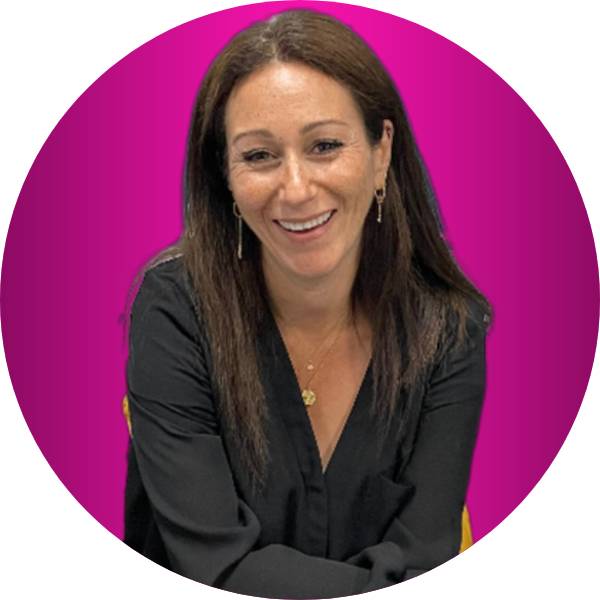
Dr Anna Colton is a leading clinical psychologist specialising in the psychology of food, eating, and emotional wellbeing in children and adolescents. She works with families, teens, and adults on everything from eating disorders to fussy eating and body image concerns. Her book, How to Talk to Children About Food, helps parents create a healthy food culture at home, heal their own relationship with food and break the intergenerational cycle of food and body image struggles. Her work is a powerful call to shift from crisis response to prevention.
Useful links in this episode
Anna's website: https://www.dranna.co.uk/
Anna's Instagram: https://www.instagram.com/drannacolton
Anna's new podcast: https://podcasts.apple.com/us/podcast/chew-on-this-with-dr-anna-colton/id1865512868
Buy Anna's book How To Talk To Children About Food: https://geni.us/HTTTCAEpisode Transcript - How to talk to children about food
Joanne Roach (00:13)
Hello and welcome to the Food for Kids podcast. I'm Joanne from the Foodies.
Today's episode is an interview with Dr. Anna Colton, who is a leading clinical psychologist specialising in the psychology of food, eating and emotional wellbeing in children and adolescents. She works with families on everything from fussy eating to eating disorders and body image concerns and she recently published a book called “How to Talk to Children About Food”.
We've had some episodes dealing with the way that we talk directly to children about food. But the thing that I found interesting in Anna's book was the psychology around how we have to be aware of our own issues with food to make sure that we don't pass them on, that intergenerational relationship with food that can easily be transmitted subconsciously. So I asked Anna to come and speak to us about that and also to give us some helpful ideas of what we can do if our child does come to us with issues of their own around food or body image. So here's the interview.
Joanne Roach (01:12)
So Anna, in your book and a lot of your social posts, you talk about how we are destined to pass on our food issues to our kids if we're not aware of them. So what are the sort of factors that might have built our own issues with food over time? And how do we go about becoming more aware of them?
Anna (01:28)
Gosh, that is such a great question. Our relationship with food is, built from the day we're born. It's about how our caregivers respond to our hunger and our fullness, whether and how they are able to meet our needs. It comes from our religion, our culture, our society. So, for example, lot of religions have festive eating and some religions have fasting. Whether you come from a family where there's a lot of having friends around cooking lovely dinners or whether you never entertain, what the food culture is at home, whether there's any trauma that's been passed down intergenerationally, either with food or just generally, whether you have a good emotional vocabulary and are taught to name your feelings or whether you end up managing your feelings through food. There’s so much that goes into it. And that's why, it can be tricky.
I think if anyone is interested even in this topic, then to sit and say, okay, what do I really believe about food? Do I believe that certain foods are good or bad? Am I scared of eating things? Do I cut out food groups or foods for any reason other than either health reasons, but health reasons like allergies, not because wellness tells us, but you know, I'm allergic to anything. Do I cut it out because of allergies, because of a physical illness, because of religious belief? If that's the case, probably all fine. Or do I cut it out you know, I have a lot of beliefs right way to eat, the wrong way to eat, certain foods being poisonous or toxic or damaging or harmful. Have I got a history of eating difficulties? Do I use food to manage my feelings? So do I comfort eat? Do I binge? do I restrict when I'm super stressed? very, very quickly, if you're honest in the way you answer those questions for yourself, you'll know.
Joanne Roach (03:10)
If we think back to our childhoods and particularly our adolescence, and we think about the grown-ups that were around us during that period, we can see that quite a lot of those thoughts and things that they said come into our own heads we're thinking about food.
Anna (03:24)
That's totally right. You know, whose voice do you hear when you serve yourself, you know, a slice of cake or, or for example, when you eat a salad, is it that you really love the salad or is it that you’re eating because you feel you must, or you should do, or ought, or, you know, do you feel that you're unable to control yourself? So, you know, all of these questions and whose voice we hear in our head is so important.
Joanne Roach (03:44)
So maybe a combination of thoughtfully unpacking that separately, but also just noticing what you think and say about food when you're in contact with it or when you're around your children.
Anna (03:53)
Completely, that's it, because we do all have a relationship with food. You know, we have all brought up surrounded by diet culture, in a world where there are very and unhelpful messages around food. So everybody will have a relationship with it - a lifelong relationship with it because we can't live without it. That's the other thing to say. You know, it's not, it's not just something that we potentially can have in our lives for pleasure and can cut out of our lives if it's troublesome.
Joanne Roach (04:19)
Yeah, exactly.
Anna (04:28)
You know, and just being curious about your own relationship. And then if you realize that you do have some beliefs that you'd rather your kids didn't grow up with, then, you know, unpacking them yourself. You don't need to do that with your children, you just need to be mindful how you talk to your children and your teens. And in fact, not just talk to but how you behave because the non-verbal is more powerful than the verbal.
Joanne Roach (04:40)
Yeah, so what your children see you doing?
Anna (04:43)
Both are important, but certainly if you say “yes, eat whatever you want” and then you won't eat pudding any time you serve it and you look in the mirror and don't like the way you look and won't wear certain clothes and your children see all that, they'll know that these messages are confusing and they'll believe what they see. They won't believe what you say.
Joanne Roach (04:58)
On this podcast, we've talked an awful lot with dietitians about trying to use neutral language about food with children, So not using words that says it's good or it's bad, or it's healthy or unhealthy, clean food, dirty food, all that kind of thing. But we also know that children do need to get some information about food as they grow up. So how do we balance that not wanting to really talk about the food with needing to give them some information so they can take care of themselves?
Anna (05:26)
So! So much to unpack just in that question and I will try not to do too much of it because yeah, we do need our kids to be able to look after themselves as independent adults. But if the food culture at home is one where meals have got lots of different foods in, more often than not, not always, they're home cooked. Where no real stress or drama around eating, that's learning. We don't actually have to bash them over the head with nutritional information. They learn that way. So I think we can get away with teaching rather less than I think most parents the urge to do. If you really do feel the urge to teach, then the conversation needs to be just really matter of fact and scientific.
So for example, we need lots and lots of different fruit and veg because each one has different minerals and we need as many of those vitamins and minerals as possible in our diet. It's like so straightforward when you really unpick it, it's so straightforward.
It is the kind of desire to give a judgment call that gets us into trouble, there's absolutely no problem with teaching around healthy eating. I think we need to do it less than most people worry about and so actually you model with the way you eat as a family your kids will learn that way too.
Joanne Roach (06:33)
Yeah. And on that note, when the kids come home from school sometimes and somebody at school to teach them healthy eating, Some of the stuff is helpful and some of it is quite judgment laden. What's the best way for us to go about, contradicting or unpacking that in a way that doesn't make it worse?
Anna (06:54)
I have this conversation a lot and it can be tricky because you don't want to undermine teachers because they are just doing what is on the curriculum and they are not trained in this area and it's really tough for them that they have to do this. I never want to put down or denigrate teachers but I do think we can say, you know what, I know that's what they're telling you but in our house the way I like to think of things is this, or we just don't talk about good and bad food here. I don't believe it's a thing. And you have a sensible conversation. if they're old enough and they say, well, why not? You can say, well, for these reasons. Short, sweet, factual, simple. Always actually. I know it sounds silly but I do think we can really over complicate.
Joanne Roach (07:34)
You work with a lot of people who have eating disorders and it is, as you said earlier, impossible for children to grow up without coming into contact with diet culture in one way or another. So how should we talk about food and bodies, both our own and other people's, in a way which reduces our children's likelihood of developing disordered eating - patterns or thoughts?
Anna (07:54)
So I feel it's really important to say you can do everything I write in my book, you can do everything that people talk about doing to protect against eating disorders. You can have a food neutral home. You can have food neutral language. You can talk a lot about body acceptance. You can make mealtimes really fabulous, you can do everything, and your child can still develop an eating disorder. And it doesn't make you a bad parent, and it isn't your fault. So I kind of want to preface whatever comes out of my mouth with that.
Joanne Roach (08:17)
Yeah, thanks for saying that. Yep.
Anna (08:20)
But - I think food and bodies are slightly different. Bodies. Just don't comment on people's bodies. Not on your mates. "Oh my God, you look amazing. You've lost so much weight. How'd you do it?" in front of your kids? We sometimes all do it. But they will infer thin is good from a comment like that. Less of that is better. When it comes to talking about our own bodies, it's about acceptance. I am not a big fan of body positivity for what it's worth. I just, feel that's unrealistic. I don't think there's a single human being in the whole world who feels positive about their body every single day.
So for me, it's about acceptance. This is the body I was born in. This is the body I've got. My body is an extraordinary thing. You know, my brain works, that enables me to live, my legs, my arms enabled me to walk, to run, you know, heart without conscious thought, my lungs breathe without conscious thought, my kidneys, my liver process waste without conscious thought is absolutely incredible what this body allows me to do. So when we focus only on the aesthetic, on how it looks, it's very reductive and it’s not the purpose of the body actually. So accepting this is what I've got. Some days I may not feel entirely comfortable in it. Some days I might feel great in it. Some days I might look in the mirror and go, “Oh my God”. And other days I might go, this is okay. That's okay, that's all great. That's normal. So we have to accept it rather than desperately wanting to shrink it.
And I think that is the key message and helping our teens in particular, but our kids know that body image fluctuates. It fluctuates with tiredness, with emotion, with stress. Sometimes what we've eaten, whether we've been poorly. Our body image fluctuates, it's not a constant. So this kind of constant striving for feeling great is unrealistic too, because even if you were to curate yourself the body of your dreams, whatever that may be, I mean, it's a terrible concept as it is, right? But just for the sake of this conversation, if you could create that, you'd still wake up sometimes and go, ugh.
Joanne Roach (10:10)
Exactly.
Anna (10:14)
Right? So I think it's about acceptance and about being neutral, so no value judgements, you know? Okay, so that person is in a bigger body. That person's in a smaller body, like that person's blonde, that person's dark, that person's gray hair, brown eyes, blue eyes, the more of that we can do, the better.
With teens in particular, girls have to gain weight and body at the beginning of puberty to be able to have enough body fat to ovulate and then have periods. It's not even just about weight, it's about percentage body fat, which is why women go down to as low a percentage body fat as men can because their periods stop and they aren't able to reproduce.
So knowing that, that your children are going to gain weight, that's great, your girls are going to gain weight, it's not something to be scared of, your boys are going to gain weight have to grow. If it triggers you, if you find you're really distressed about your child gaining weight or their body shape changing, that's your work. That's when you know there's an issue and you need to go and do that away from them.
Joanne Roach (11:08)
So if, if your child does say to you something about needing to lose weight or gain weight or expresses any kind of desire about changing what they eat and you feel that it's because of ideas that they've picked up about their weight or their body image, how should we respond to that?
Anna (11:23)
That's a really good answer is always be curious. Ah so where's this idea come from? Why is this cropping up now? What are you feeling about your body? Has somebody said something? So that you can keep the conversation open. Look, if kids say, you know, I just want to eat a bit less chocolate, I'm eating a couple of chocolate bars a day and I want to eat a bit less chocolate and I want to eat some more fruit and veg. You know, you can support that, but support it in a very gentle way. You can say, okay, so I'll make a veg box and leave it in the fridge, help yourself. But supporting a diet, supporting restriction, I think is always a no-no. Dieting is causally linked to the development of eating disorders. And anybody who has had a child an eating disorder, or indeed anybody who's had an eating disorder themselves, will know the profound distress and pain that it causes and the damage to health in the short and medium and potentially long term, much more so than a couple of years of fluctuating weight through adolescence or even 10 years of fluctuating weight through adolescence. Now, of course, there are conditions where you might need to pay attention to weight, but you never want to talk about the norm by referring to the extreme.
Joanne Roach (12:27)
Fair. So just be curious as to why they're asking these things. Try and see if you can dig into what the emotions are.
Anna (12:33)
Yeah. And what's running under it. And if they say, well, I just, feel really uncomfortable and all my friends are really skinny and I'd just like to tone up. You can say, how you, how would you want to do that? What would that look like? But if they said, I'd like to go, you know, go for a run a couple of times a week and can we buy weights so that I can do some weights at home? You might say, okay, as long as it's sensible, we're going to keep an eye on that. I don't want it to become extreme, but I can support you in some of that. Because we don't want to actively not support something that might be a really helpful healthy behaviour but we don't want to support food restriction.
Joanne Roach (13:05)
So that's a good, a good balance to have. And so finally, for parents who are listening to this, who've picked up one or two things during this conversation and gone, Ugh, I've got quite a lot of this wrong, how would you recommend that we go about correcting those mistakes?
Anna (13:20)
So everything has to come from a place of compassion. So understanding, ok, that's either how I grew up or that's what I've learned to believe or it doesn't matter what. I'm not gonna beat myself up for it because that's not helpful. But I either will need to read some books and there are some great books out there or there are some really good Instagram or TikTok accounts. There are a lot of very bad ones but there are some good ones too. Or I'm going to go and see someone who can help me with this professionally, but I'm going to just become more vigilant about how I, how I relate to myself and to food and eating when my kids are in the room, and I'm going to start doing some work so that, you know, maybe I free myself and then free my kids.
Joanne Roach (13:57)
And then if you say something in the moment, you respond and you realise it's your granny's voice, whatever, and you say something and you clock it straight away, is it okay to correct that in the moment?
Anna (14:05)
Correct it. Please, please correct it! it. We call it, I'm sure you know, but the kind of psychology it's called rupture and repair. You know, you screw up. It's never the rupture. It doesn't matter. You can have the argument. You can say the wrong thing, or you pass comment in a way you shouldn't. Go back and you say, look, you can do it in the moment or you can do it later. Look, I said this earlier and it just wasn't okay. I'm so sorry. I was, I was irritable or I was tired or I was stressed or I was worried or actually it was just an automatic response and it was, you know, grandpa's voice coming out my mouth. And I don't agree with any of that. And I was just very sorry I said it. From there, there can be the possibility of a conversation. And I would say that rupture repair is one of the greatest life can teach your kids. Emotional regulation, distress tolerance, rupture repair, they're my top three.
Joanne Roach (14:49)
So these little conversations that you get wrong, you're also showing them how to fix something when you've got something wrong.
Anna (14:55)
Absolutely. And how to negotiate conflict through life and how to kind of have relationships can endure tricky patched, to show them that you don't need to be frightened of getting something wrong. You don't need to be frightened actually even of having a bit of conflict because you can repair. It's always about the repair. It's never really about the rupture.
Joanne Roach (15:17)
I hope you found that helpful. I loved Anna's instructions to be compassionate to ourselves about our mistakes and giving us that reassurance that repairing our mistakes actually can teach our children something really positive.
If you found this conversation interesting, I absolutely recommend that you get Anna's book. It breaks down the different issues that families might have at every stage of childhood, so it will meet you wherever you are right now. And although it does go into the psychology and science properly, it's always very accessible and easy to take in. Each chapter has some key takeaways at the end to review, and there are some very practical ideas in it and some conversation starters to use with yourself and your kids. I'll put a link in the show notes to the book, as well as Anna's socials and her fab new podcast too. Do go and give her a follow.
This episode has run slightly longer than usual because we went into a couple of points in more detail, so I won't keep you with a long outro, just say that I hope to see you on the next episode, and in the meantime, happy eating!
Episode Highlights - How to talk to children about food
Chapters
00:00 Introduction
01:12 How do we identify our own issues with food?
03:44 Working with our issues to prevent passing them on.
04:34 What we do matters as much as what we say
05:17 How to teach kids about nutrition safely
06:38 What to do when your child picks up misinformation or judgment
07:34 Body image and how to try to reduce the risk of disordered eating
11:08 What to do if your child asks to diet or change their food
13:07 What to do when you say the wrong thing
15:17 Summary and outro
That was the episode where we learned how to talk to children about food, as well as how to prevent our own issues with food being passed on to them.

0 comments